
The Myth of "Everyone is Welcome": Why Good Intentions Aren't Enough in Martial Arts
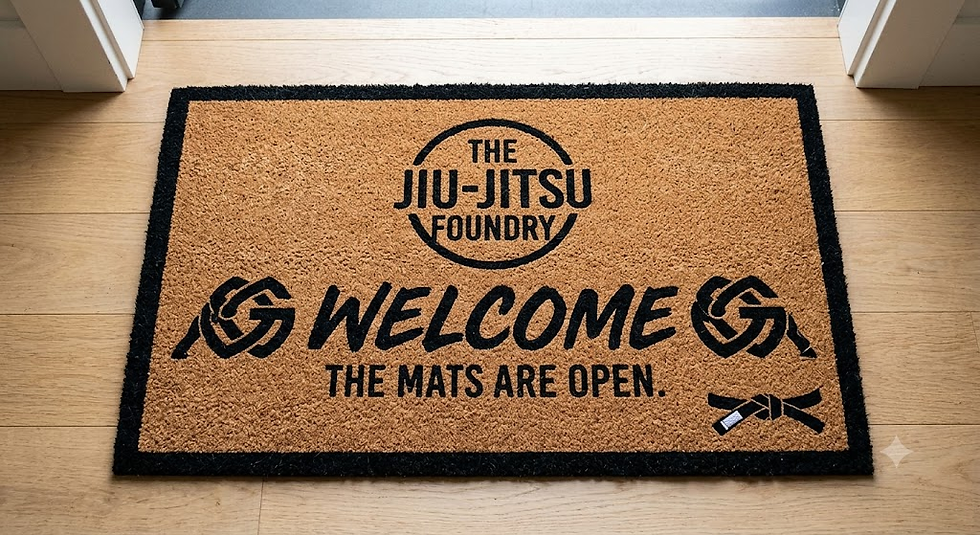
Walk into almost any martial arts gym today and you'll likely see "Everyone is Welcome" displayed prominently on the wall or website. It's become the standard promise of modern martial arts schools.
But for many students — those who come from non-athletic backgrounds — that promise often feels more like wishful thinking than lived reality.
The gap between intention and experience reveals an uncomfortable truth: good intentions alone don't create inclusive environments. True inclusivity requires deliberate effort, honest self-examination, and a willingness to see the barriers that aren't always visible to those who don't experience them.
Why "Inclusive" Gyms Still Feel Exclusive to Some Students
Most martial arts schools genuinely believe they're welcoming. The problem is that exclusion rarely announces itself. It doesn't usually look like overt discrimination — it looks like a collection of small moments, assumptions, and structural defaults that accumulate into a clear message: you don't quite fit here.
The out-of-shape beginner feels every glance during partner warm-ups.
None of these students are told they're unwelcome. They just feel it — and most leave quietly without explaining why.
The Neurodivergent Student: A Mismatch in How We Teach
Traditional martial arts instruction follows a predictable format: demonstrate, then drill. It works well for neurotypical learners. It often fails everyone else.
Students with ADHD may struggle to maintain focus through lengthy explanations. Those on the autism spectrum may need more processing time or find physical contact and sensory noise overwhelming. Students with dyspraxia may need movement broken into smaller components with more repetitions before it clicks.
The real cost here isn't just individual frustration — it's wasted potential. Many neurodivergent students bring exceptional qualities to BJJ: intense focus, analytical thinking, pattern recognition, and deep persistence. When instruction methods don't accommodate how they learn, those qualities never get a chance to emerge.
Simple adjustments matter more than gyms often realise: offering multiple explanation formats, building in processing time, reducing sensory overwhelm, or allowing students to observe before jumping into partner drills. These aren't accommodations that lower the standard — they're what actually gives diverse learners a fair shot at reaching it.
The Non-Athletic Beginner: Lost Before They Even Start
A student with no athletic background walking into their first BJJ class is navigating a specific kind of vulnerability. Fast-paced warm-ups, complex movement patterns, and a room full of people who look like they belong there — it's an environment that quietly communicates a fitness prerequisite that was never stated in the marketing.
The irony is significant: BJJ is one of the most effective tools available for developing fitness, coordination, and body awareness. But only if students feel comfortable enough to stay long enough to experience it.
Gyms that genuinely serve this population do a few things differently. They normalise struggle explicitly, not just in theory. They avoid structuring classes in ways that put beginners on display. They build cultures where effort and progress are what earns respect — not athleticism you either showed up with or didn't.
The Inner Circle Problem
Almost every gym has one — a group of students who receive more attention, more mat time, more social inclusion. These circles form naturally around students who are athletic, socially confident, or simply similar to the instructor.
The students outside those circles often receive adequate technical instruction. What they don't receive is belonging. And belonging — the sense that you're genuinely part of something — is what keeps people training for years instead of months.
Instructors who are aware of this tendency can actively counteract it: deliberate attention to quieter students, explicit recognition of effort over talent, and a culture where senior students are expected to bring newer members in rather than train around them.
What Genuine Inclusivity Actually Requires
The shift from performative to genuine inclusivity isn't about lowering standards or making BJJ something it isn't. It's about removing the unnecessary barriers that prevent capable, committed students from accessing what the art actually offers.
Practically, this looks like:
Instructional flexibility — multiple explanation formats, processing time built into class structure, willingness to break technique into smaller progressions
Culture built around effort — where a student's worth in the room is measured by showing up and engaging, not by how athletic or experienced they are
Honest feedback channels — anonymous, accessible ways for students to flag experiences of exclusion, since most who feel it never say anything directly
The measurement isn't headcount diversity. It's retention across different student populations — whether the students who walked in uncertain actually stayed.
Frequently Asked Questions
Is BJJ welcoming to beginners with no athletic background? It depends heavily on the academy. The art itself is highly accessible — technique and leverage matter more than raw athleticism. But gym culture varies. Look for schools that explicitly support beginners, have visible diversity in their student base, and where upper belts are engaged with newer members.
Are there BJJ gyms that cater to neurodivergent students? Increasingly, yes. Some academies have adapted their instruction to support different learning styles, including slower technique breakdowns, smaller class sizes, and clearer communication norms. It's worth asking directly before committing to a school.
How can a gym move from performative to genuine inclusivity? Start with honest self-assessment rather than policy announcements. Seek feedback from students who represent underserved groups. Make small structural changes — in how techniques are explained, how classes are structured, how facilities are designed — and build from there. Consistency over time is what distinguishes genuine commitment from marketing.
Does inclusivity compromise training quality? No. Diverse training environments consistently produce better instructors — more adaptable, more patient, more technically precise. The skills required to teach a neurodivergent student or a late-starting adult are the same skills that make instruction better for everyone.
"Everyone is Welcome" should mean something. Not as a tagline, but as a standard the gym is actively held to — in its policies, its instruction, its culture, and the quiet signals it sends to every student who walks through the door uncertain whether they belong.
At The Jiu-Jitsu Foundry, we believe that standard is worth pursuing — not because it's good marketing, but because the students who need it most are often the ones with the most to give.


Comments